
Adult Speech Therapy

Support for Communication, Cognition, and Swallowing Across Adulthood
Communication changes can happen for many reasons. Whether you're recovering from a medical event, adjusting to a neurological diagnosis, noticing changes in memory and thinking skills, or experiencing difficulties with swallowing, you do not have to navigate those challenges alone.
At Mindful Communication Group, our licensed Speech-Language Pathologists provide holistic, client-centered care to help adults communicate more effectively, participate more fully in daily life, and maintain as much independence as possible.
We understand that these changes can affect confidence, relationships, work, and everyday routines. Our goal is to meet you where you are and provide practical strategies and personalized treatment that support the life you want to live.
Adult Speech Therapy May Help With:
*
Adult Speech Therapy May Help With: *

Communication
Difficulties finding words, expressing thoughts clearly, understanding information, or participating in conversations can impact every aspect of daily life. We help strengthen communication skills and develop strategies that improve confidence and connection with others.
Support may include:
Word-finding strategies
Expressive language skills
Understanding spoken and written language
Conversational skills
Communication repair strategies
Functional communication for everyday situations
Cognitive-Communication
Changes in thinking skills can affect communication, organization, and independence. Our therapists provide practical interventions that target the cognitive skills needed for managing daily activities and responsibilities.
Support may include:
Memory strategies
Attention and concentration
Organization and planning
Executive functioning
Problem-solving and reasoning
Sequencing and task completion
Safety awareness for daily activities
Speech Clarity
Changes in speech production can make it difficult for others to understand you and may affect confidence in social, work, or family settings. Therapy focuses on improving intelligibility and supporting effective communication.
Support may include:
Speech intelligibility strategies
Motor speech treatment
Dysarthria intervention
Speech coordination and pacing
Breath support for speech
Communication confidence
Swallowing
Swallowing difficulties can impact nutrition, hydration, health, and quality of life. We provide assessment and treatment to help with eating and drinking as safely and comfortably as possible.
Support may include:
Clinical swallowing evaluations
Safe swallowing strategies
Mealtime recommendations
Therapeutic swallowing exercises
individualized swallowing exercises and strategies, when clinically indicated
Caregiver and family education
Collaboration with physicians and medical providers when appropriate
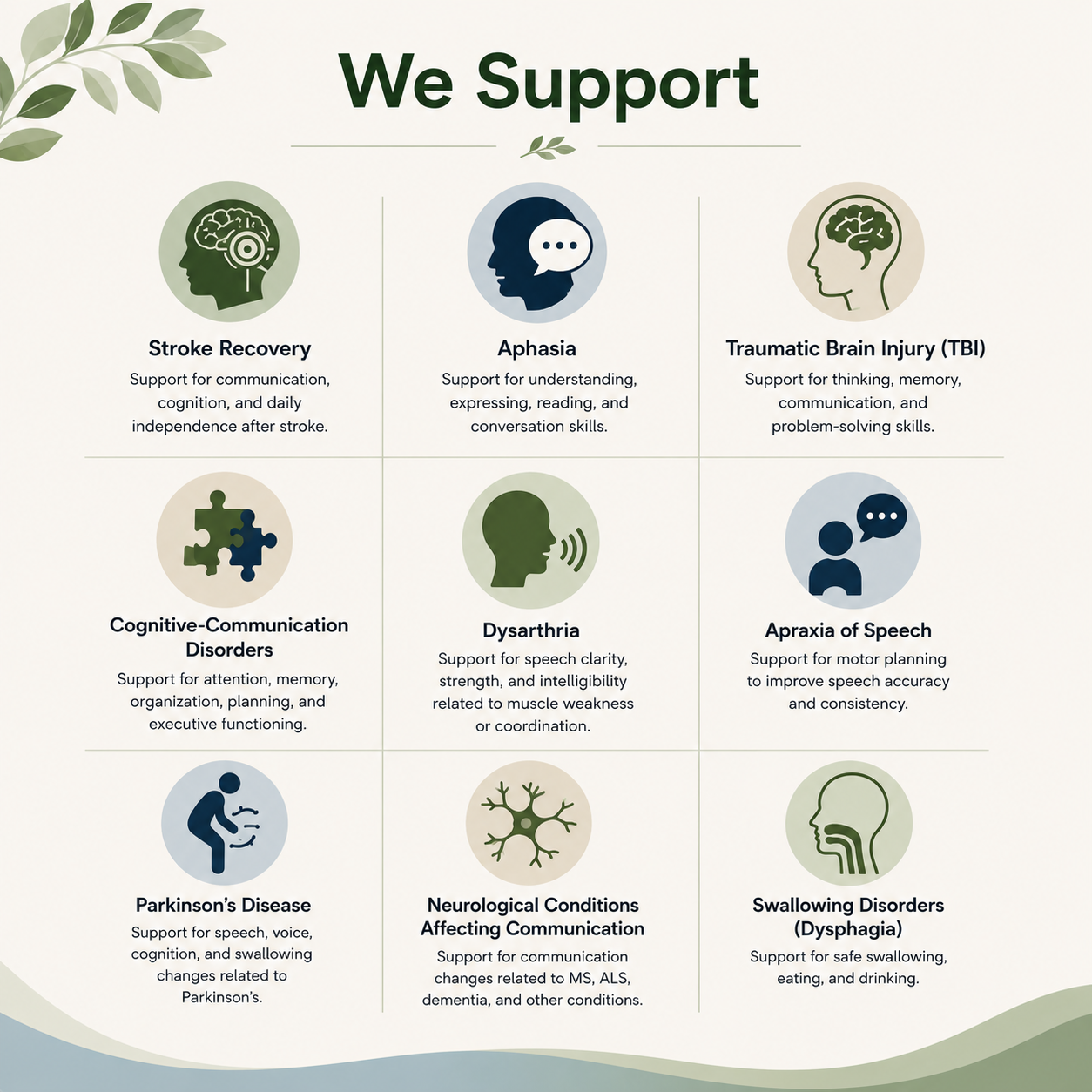
What We Help With
Stroke Recovery
Traumatic Brain Injury (TBI)
Dementia and Alzheimer's disease
Multiple sclerosis
Parkinson’s Disease
Neurological Conditions Affecting Communication
Swallowing Disorders (Dysphagia)
Motor speech disorders
Cognitive changes affecting daily functioning
WHAT TO EXPECT
Evaluation
We learn about your concerns, strengths, medical history, and goals.
Therapy Plan
Recommendations are developed around your individual needs and priorities.
Therapy & Progress
Sessions focus on meaningful, functional goals that support daily life.

Insurance Accepted for Adult Speech Therapy
Mindful Communication Group participates with a variety of insurance plans.
Insurance participation varies by service, location, clinician, and individual insurance plan.
Visit our Insurance & Billing page to view the current insurance plans accepted for your service and location.
Our team will verify your insurance information during the intake process and help identify applicable benefits and any known financial responsibility.
Verification of insurance benefits does not guarantee coverage or payment. Clients are responsible for applicable deductibles, copays, coinsurance, and non-covered services.
Ready to Get Started?

If communication, cognition, speech clarity, or swallowing concerns are affecting daily life, we are here to help.
Frequently Asked Questions
-
Yes. We accept a variety of commercial insurance, Medicare, and Medicaid plans for adult speech therapy. Accepted insurance plans vary between our Newport News, Virginia and Douglasville, Georgia locations.
Please review the insurance information above for the current list of accepted plans. If you're unsure whether we accept your specific insurance plan, contact our office at 757-260-5507 or 678-338-8012 and our team will be happy to assist with insurance verification.
Insurance verification does not guarantee coverage or payment.
-
A referral may be required depending on your insurance plan. Some insurance plans, including certain Medicare and Medicaid plans, may require a physician's referral or order before speech therapy services can begin.
Our team will review your insurance requirements during the intake process and let you know if a referral or additional documentation is needed before scheduling your evaluation.
-
You or your loved one may benefit from speech therapy if you are experiencing:
Difficulty finding the right words or expressing thoughts clearly
Trouble understanding conversations, instructions, or written information
Memory, attention, organization, or problem-solving challenges that affect daily life
Changes in speech clarity that make it harder for others to understand you
Difficulty swallowing food, liquids, or medications safely
Communication or cognitive changes following a stroke or traumatic brain injury
Symptoms related to neurological conditions such as Parkinson's disease, multiple sclerosis, or dementia
Age-related communication concerns that impact independence or quality of life
If you are unsure whether speech therapy is appropriate, our team can help determine whether an evaluation may be beneficial. Early identification and support can often improve outcomes and help individuals maintain confidence, safety, and meaningful participation in everyday life.
-
Your first appointment focuses on understanding your concerns, medical history, communication needs, and goals.
Depending on the reason for referral, your speech-language pathologist may evaluate communication skills, cognitive functioning, speech clarity, or swallowing concerns. Following the evaluation, recommendations and next steps will be discussed collaboratively.
-
Session length varies based on individual needs, treatment goals, and insurance requirements. Most treatment sessions range from 30–60 minutes, while evaluations may be longer.
-
Frequency recommendations are individualized and based on your goals, evaluation results, medical history, and daily functional needs. Some individuals benefit from short-term therapy, while others may require ongoing support.
-
Depending on clinical appropriateness, teletherapy may be available for certain speech therapy services. We can discuss whether virtual services are a good fit during scheduling.
-
How do I get started?
Getting started with speech therapy is easy. You can:
Click the “Schedule an Appointment” button on our website.
Schedule an appointment online: Schedule an Appointment
Call or text our office:
Virginia – Newport News: 757-260-5507
Georgia – Douglasville: 678-338-8012
Our team will review your information, insurance benefits, and any referral requirements and guide you through the next steps.
-
To help us make the most of your initial visit, we recommend bringing:
Any physician referrals for speech therapy, if applicable
Copies of recent medical records related to your concerns, such as hospital discharge summaries, imaging reports, swallow study results, or neurological evaluations
A list of current medications
Hearing aids, dentures, glasses, communication devices, or other assistive equipment you regularly use
Questions or concerns you'd like to discuss with the therapist
A family member, caregiver, or support person, if you would like someone present to help provide information or participate in recommendations and education
Ready to Get Started?
Have questions or ready to schedule your child's speech-language evaluation? Our team is here to help.
Schedule online:
Schedule an Appointment
Virginia – Newport News: Call or text 757-260-5507
Georgia – Douglasville: Call or text 678-338-8012
You can also use the “Schedule an Appointment” button on our website to get started.